
Loft storage and insulation
Compression can cut the thermal performance of loft insulation by more than half, according to National Physical Laboratory findings reported by Roofing Today. The finding forms part of the case being made for protecting mineral wool from the weight of stored possessions, rather than treating the installation of insulation alone as sufficient.
Kevin Baker, chief executive of Amazing Lofts, said household storage accounted for almost all the cases of flattened insulation he described. He identified Christmas trees, camping equipment and luggage as items placed directly on mineral wool rolls. His warning concerned the way lofts are used after insulation has been fitted.
The Banbury company also claimed that compressed mineral wool was allowing warm air to escape through the roofs of most properties that already had loft insulation. That assessment was made by the business. It distinguished homes with material in place from homes where that material was still able to perform effectively.
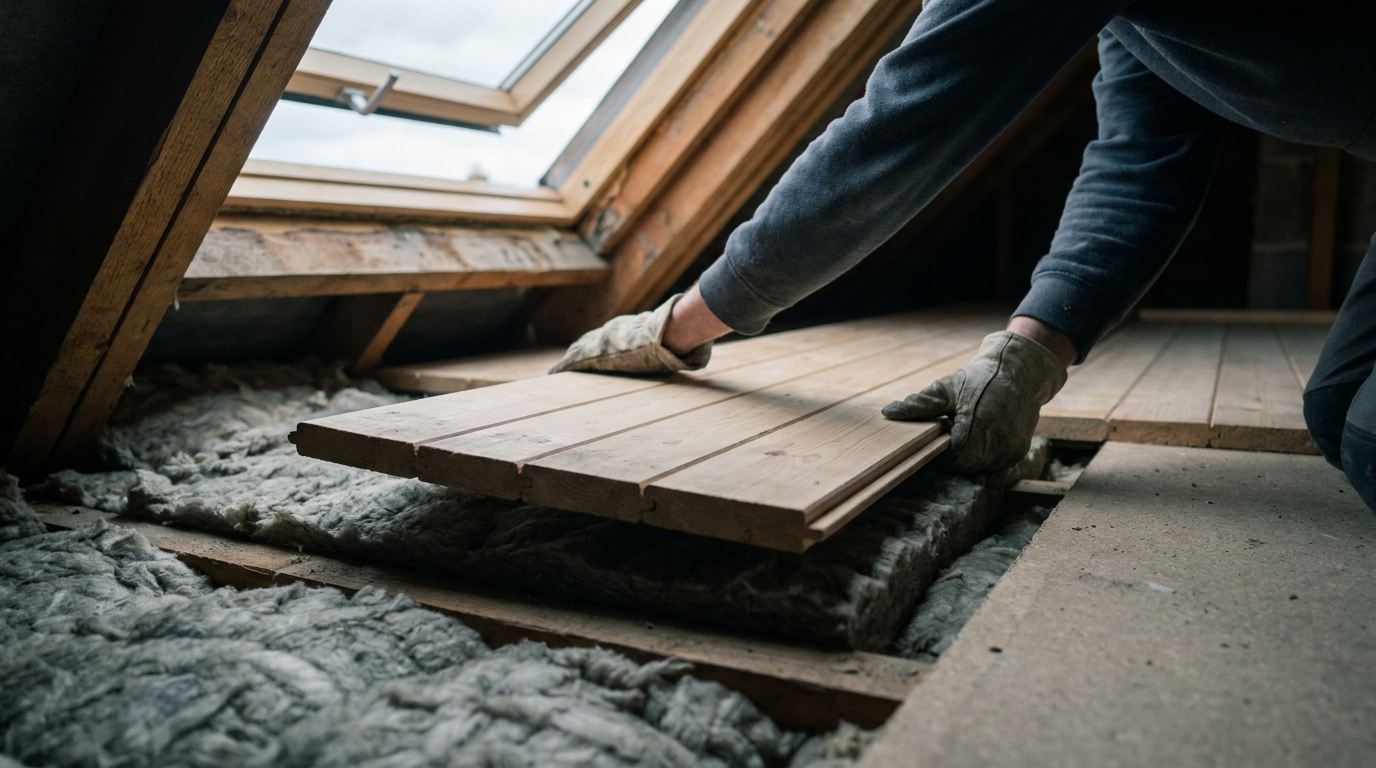
Dave Raval, director of the National Warm Homes Council, has developed a raised loft system made from recycled plastic. It is intended to allow households to retain storage space without damaging the insulation beneath it. The approach addresses the use of the loft for possessions as well as its role in retaining heat.
Raval said the boarding needed to sit above the upper surface of the insulation. His argument concerned the relationship between the storage floor and the material below, not simply whether a loft had been boarded. He wants the government to recognise that clearance as a requirement when considering insulation improvements.
Energy bills and existing homes
Amazing Lofts estimates that more than eight million UK homes have no loft insulation at all. The figure is the company's assessment of the scale of the uninsulated housing stock. It underpins its appeal for greater attention to roof-level heat loss alongside the separate problem of damage to insulation already installed.
The company's team put the additional annual energy cost associated with ineffective insulation at £370 for a homeowner. This was presented as a cost arising from poor insulation performance, rather than the price of undertaking work. The estimate was used to explain the household financial consequences of leaving the problem unresolved.
Roofing Today reported on 8 September 2026 that Ofgem's energy price cap was due to rise the following month. It said the change would add £60 a year to the bill of a typical household. The forthcoming increase provided the immediate context for the company's appeal ahead of winter.
The report also said the new cap would be the highest for three years. That comparison concerned the level of the forthcoming cap, rather than the longer-term movement in household bills. The announcement prompted the company to step up its efforts to explain the role of loft insulation to homeowners.
Baker said energy bills had risen by a third over the preceding decade. He cited that longer-term increase alongside the cost-of-living pressures facing households. His comments placed the firm's request for investment in the context of sustained energy costs, as well as the increase expected in the next billing period.
He also said millions of people were living in properties whose insulation met only basic standards dating from the 1970s. The concern he raised was therefore not confined to homes with no insulation. It also covered the standard of protection in older installations and whether that remained sufficient for residents.
What the visit covered
Woodcock visited Amazing Lofts at its Banbury headquarters and took part in fitting a raised storage floor, according to Roofing Today. The practical work gave the MP direct experience of installing boarding. The visit followed the price-cap announcement and included an explanation of professionally fitted loft insulation and storage arrangements.
Afterwards, Woodcock said seeing the work had demonstrated how local measures could help residents manage their energy costs. He referred specifically to the difference made by insulation that had not been compressed. His response focused on the practical installation he had seen, rather than setting out a new funding commitment.
Baker said a quarter of heat in homes escaped through the roof. He used that figure to explain why the loft was a focus for the company's work. The claim concerned the contribution of the roof to household heat loss and was part of his explanation of the benefits of insulation.
He described a role for loft insulation in both cold and hot weather. During colder periods, he said, it helped retain rising warmth within the living space. During summer heatwaves, he said it helped keep external heat out. His explanation extended beyond the winter heating costs driving the current appeal.
Baker also said a third of people had never entered their loft. He urged homeowners to check whether their insulation was sufficient before winter. That advice was directed at establishing the condition of the existing loft space, including in properties where residents might not have inspected the material themselves.
The case put to government
The government programme identified in the discussions was the £15 billion Warm Homes Plan. Baker said the meeting was an opportunity to explain how investment in the work offered by the company could support delivery of that plan. The business was seeking to connect its proposals with the government's existing programme.
Raval welcomed the intention behind the plan but said its effectiveness would depend on the proposed measures continuing to work over time. His concern was the durability of their performance after installation. He argued that government support needed to take account of what happened to the insulation during subsequent household use.
He also said professionally installed insulation and loft boarding would reduce energy bills. This was Raval's assessment of the combined work, rather than a reported result from Woodcock's visit. His case for the package brought together the thermal function of the insulation and the protection provided by a separate storage surface.
Raval said he hoped Woodcock would pass the understanding gained during the visit on to government. He thanked the MP for attending and linked that request to the aim of reducing bills across the UK. The next step he sought was greater government awareness of the installation issue he had described.